
Why K26 Signals a Turning Point for Enterprise AI
The conversation around AI is shifting rapidly. For the past two years, businesses have focused largely on copilots—tools that assist employees by summarizing information, generating content, or helping with decisions. At K26, however, one message became impossible to ignore: enterprise AI is moving beyond assistance and toward action.
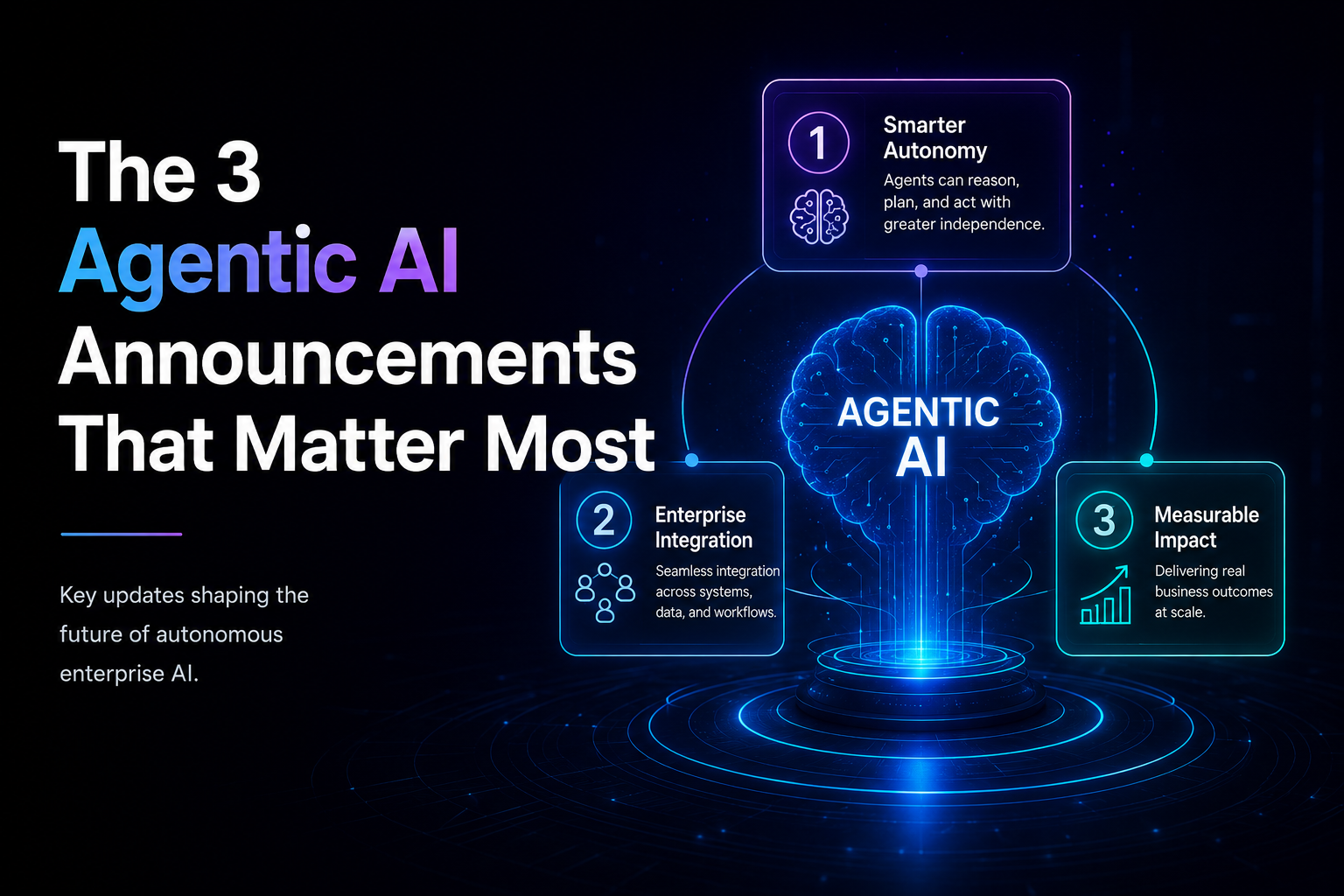
The biggest announcements were not about smarter chat interfaces or incremental automation. Instead, they highlighted a future where AI systems can execute workflows, operate with accountability, and rely on connected enterprise intelligence to deliver real business outcomes. For organizations planning their digital transformation strategies, three themes stood out as especially important.
1. AI Agents Are Becoming Operational
Perhaps the most significant shift showcased at K26 was the evolution of AI from passive copilots to active, operational agents.
ServiceNow’s roadmap made it clear that AI agents are increasingly capable of handling real enterprise execution. Rather than simply recommending next steps, these systems can coordinate tasks, trigger workflows, and intelligently escalate decisions when human intervention becomes necessary.
This marks a major leap in enterprise productivity. Instead of employees spending time managing repetitive processes, AI agents can independently orchestrate actions across departments, systems, and business functions. The result is not just faster work—it is fundamentally different work, where humans focus more on strategy, judgment, and innovation.
For enterprises, the key question is no longer if AI can support workflows, but how quickly organizations can prepare for autonomous workflow execution.
2. Governance Will Define Enterprise AI Adoption
As AI systems become more autonomous, governance is no longer optional—it is foundational.
One of the strongest themes emerging from K26 was ServiceNow’s emphasis on embedding governance directly into enterprise workflows. As organizations increase their reliance on AI, concerns around observability, compliance, transparency, and risk management naturally intensify.
Enterprises need confidence that AI actions are traceable, explainable, and aligned with regulatory expectations. Without strong governance frameworks, even the most advanced AI initiatives may struggle to scale.
The future winners in enterprise AI will not necessarily be the companies experimenting with the most models, but those building trust, accountability, and compliance into every layer of AI deployment.
3. Workflow Data Fabric Is the Foundation
AI execution is only as effective as the data powering it.
K26 reinforced a critical reality: disconnected systems limit AI performance. Autonomous agents require unified access to workflows, enterprise context, and operational intelligence to make accurate decisions and take meaningful actions.
This is where Workflow Data Fabric strategies become essential. By connecting enterprise systems and creating a unified intelligence layer, organizations enable AI to operate with greater precision and business context.
Companies investing in workflow intelligence today are positioning themselves for long-term competitive advantage. In many ways, Workflow Data Fabric is becoming the invisible infrastructure behind the next generation of enterprise AI.
Conclusion
K26 made one thing clear: the future of enterprise AI is agentic, governed, and data-driven. AI agents are moving into operational roles, governance is becoming the deciding factor for enterprise trust, and Workflow Data Fabric is emerging as the backbone of intelligent execution.
For business leaders, the takeaway is straightforward—preparing for the next phase of AI means thinking beyond experimentation and focusing on enterprise readiness. The organizations that align technology, governance, and connected data today will be the ones leading tomorrow’s AI-driven enterprise landscape.


Leave A Comment