

Introduction
As organizations expand their ServiceNow platforms, customizations, outdated configurations, and inefficient workflows can create technical debt. Over time, these issues increase maintenance costs, affect performance, and make upgrades more challenging.
A ServiceNow technical debt assessment helps organizations identify these risks, prioritize improvements, and maintain a scalable, reliable platform.
What Is ServiceNow Technical Debt?
ServiceNow technical debt refers to the additional effort and cost caused by quick fixes, unnecessary customizations, outdated configurations, and inefficient development practices.
Common examples include:
- Unnecessary custom scripts and business rules
- Duplicated workflows and automations
- Outdated integrations and configurations
- Poor data quality and CMDB inconsistencies
- Customizations that complicate platform upgrades
Why Is a Technical Debt Assessment Important?
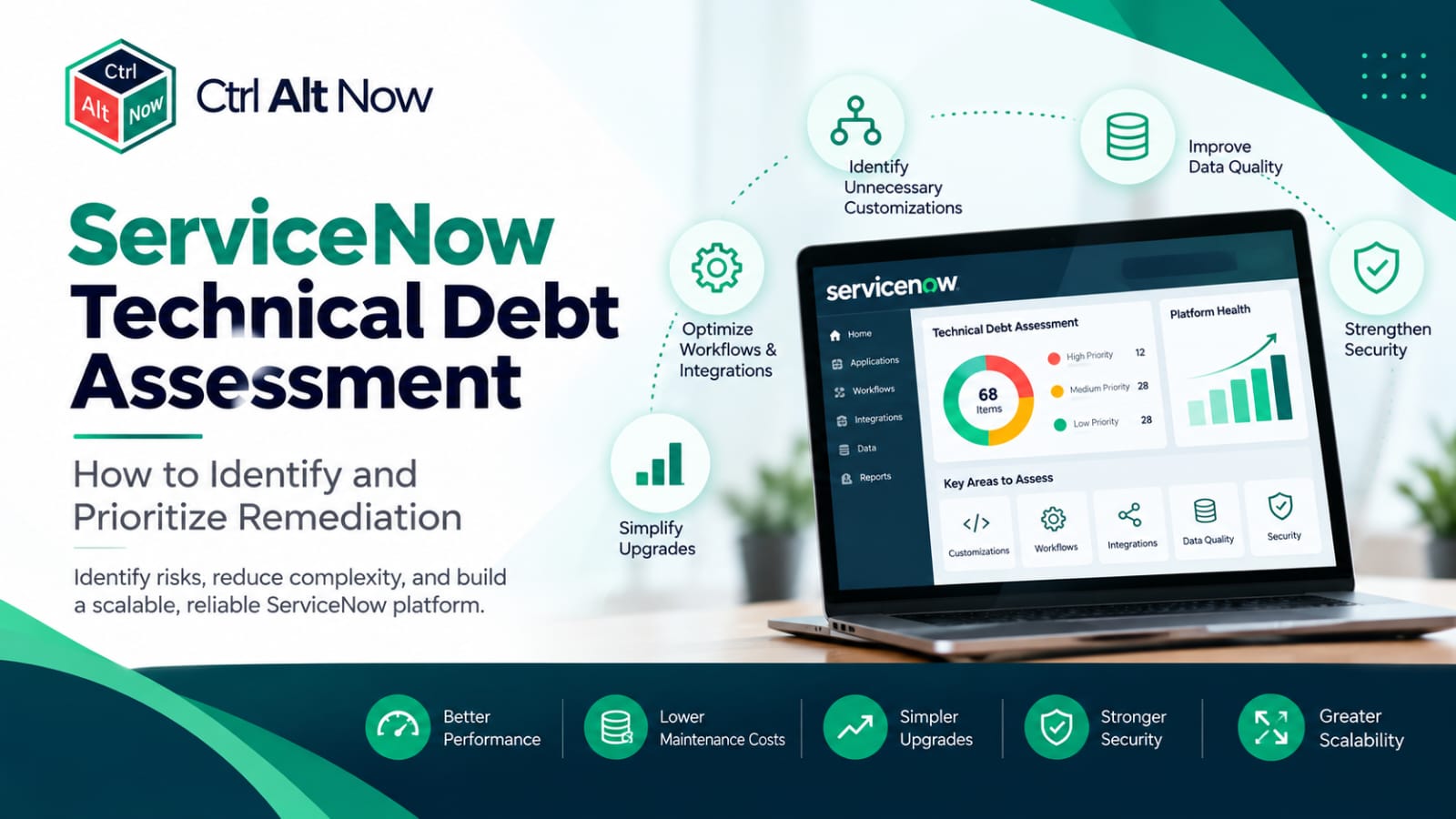
A structured assessment helps organizations:
- Improve performance: Identify inefficient scripts and processes.
- Simplify upgrades: Reduce conflicts caused by customizations.
- Lower maintenance costs: Eliminate unnecessary complexity.
- Strengthen security: Identify outdated configurations and potential risks.
- Support scalability: Prepare the platform for future business needs.
How to Conduct a ServiceNow Technical Debt Assessment
1. Review Platform Customizations
Evaluate custom applications, scripts, business rules, and configurations to identify unnecessary or outdated elements.
2. Analyze Workflows and Integrations
Identify duplicated automations, inefficient workflows, and integrations that require maintenance or redesign.
3. Evaluate Data Quality
Review CMDB accuracy, duplicate records, and data inconsistencies that may affect service management.
4. Prioritize Remediation
Classify issues based on business impact, security risk, upgrade complexity, and remediation effort.
5. Create an Improvement Roadmap
Develop a phased plan to address critical issues first while minimizing disruption to daily operations.
Best Practices for Reducing ServiceNow Technical Debt
- Follow ServiceNow development standards.
- Avoid unnecessary customizations when standard capabilities are sufficient.
- Document scripts, integrations, and configuration changes.
- Review technical debt regularly.
- Test changes before deploying them to production.
How CtrlAltNow Can Help
CtrlAltNow helps organizations optimize their ServiceNow environments through platform assessments, configuration improvements, workflow optimization, and upgrade readiness planning. A structured approach helps reduce unnecessary complexity and support long-term platform stability.
Conclusion
A ServiceNow technical debt assessment enables organizations to identify platform weaknesses, prioritize remediation, and improve maintainability. By addressing technical debt proactively, businesses can reduce operational risks and build a more efficient ServiceNow environment.


Leave A Comment