

Introduction
Sales compensation is one of the most important components of a successful sales strategy. Well-designed compensation plans motivate sales teams, encourage the right behaviors, and align individual performance with broader business objectives.
However, managing sales compensation becomes increasingly complex as enterprises expand their sales teams, introduce multiple products and territories, and operate with different commission structures.
Many organizations continue to rely on spreadsheets, emails, and disconnected systems to manage commissions. These manual processes can result in calculation errors, delayed approvals, limited visibility, and significant administrative effort.
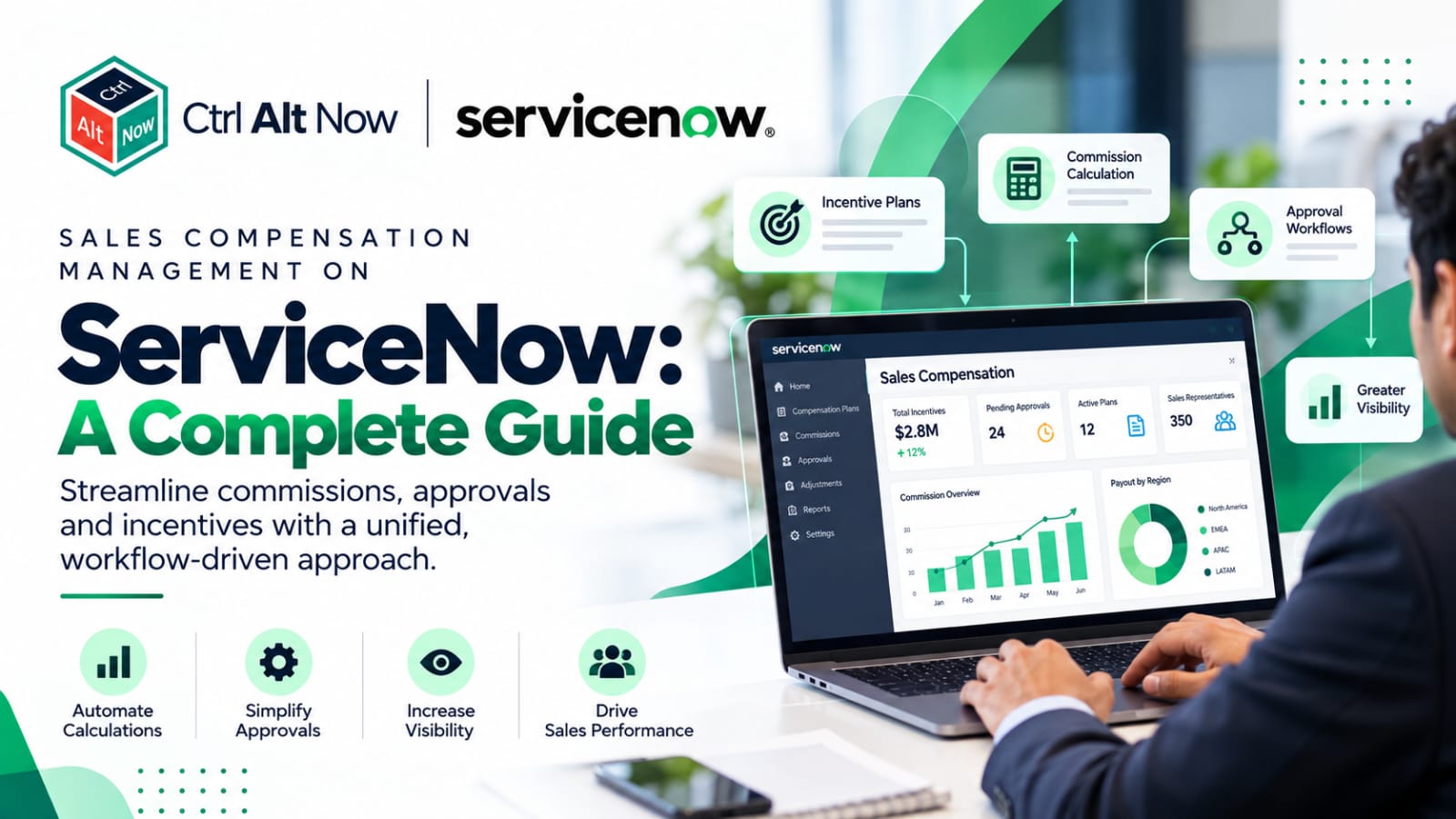
Sales compensation management on ServiceNow offers an opportunity to bring these processes into a centralized enterprise workflow environment. With solutions such as IncentNOW from CtrlAltNow, organizations can modernize how they manage sales incentives, commissions, approvals, and compensation workflows.
What Is Sales Compensation Management?
Sales compensation management is the process of designing, administering, calculating, approving, and monitoring compensation tied to sales performance.
Depending on the organization, a sales compensation program can include:
- Base salary and variable compensation
- Sales commissions
- Bonuses
- Quota-based incentives
- Revenue-based incentives
- Accelerators
- Performance-based rewards
- Product or territory incentives
- Commission adjustments and clawbacks
The goal is to create a compensation structure that is accurate, transparent, financially sustainable, and aligned with business objectives.
Why Sales Compensation Management Becomes Challenging
Complex Compensation Plans
Enterprise organizations may have different compensation plans for account executives, sales development representatives, channel partners, regional teams, and sales leadership.
Each plan can have different quotas, commission rates, thresholds, accelerators, and eligibility rules.
Managing these variations manually can become difficult as the organization grows.
Multiple Data Sources
Commission calculations often depend on information from CRM, ERP, billing, HR, and other enterprise systems.
When this data is spread across multiple platforms, sales operations and finance teams may spend considerable time collecting and reconciling information.
Manual Calculations
Spreadsheets can work for smaller organizations, but they become increasingly difficult to maintain when transaction volumes and compensation rules increase.
Manual processes also create opportunities for formula errors, duplicate data, outdated information, and inconsistent calculations.
Limited Visibility
Sales representatives want to understand how their performance translates into compensation.
If commission information is only available through finance teams or spreadsheets, salespeople may have limited visibility into their earnings and progress.
Why Use ServiceNow for Sales Compensation Management?
ServiceNow is widely used by enterprises to manage workflows, service operations, automation, and business processes.
Extending this workflow approach to sales compensation can help organizations bring compensation-related processes into a centralized environment.
Instead of treating sales compensation as an isolated finance activity, organizations can connect compensation workflows with broader enterprise processes.
Centralized Workflow Management
ServiceNow can provide a structured environment for managing compensation-related requests, approvals, tasks, and workflows.
This can reduce reliance on email-based processes and disconnected spreadsheets.
Automated Approvals
Compensation changes, adjustments, exceptions, and approvals can follow predefined workflows.
The right stakeholders can be assigned tasks based on business rules, helping reduce delays.
Enterprise Integration
A modern sales compensation solution should be able to work with the organization’s broader technology environment.
Connecting relevant sales, finance, employee, and business data can help create a more consistent compensation management process.
Key Components of Sales Compensation Management on ServiceNow
1. Compensation Plan Management
Organizations need a centralized way to define and manage compensation plans.
Plans may include:
- Commission rates
- Quotas
- Targets
- Eligibility criteria
- Accelerators
- Thresholds
- Bonuses
- Adjustments
- Clawbacks
A structured system can make it easier to manage these rules as compensation programs evolve.
2. Commission Calculation
Commission calculations are at the heart of sales compensation management.
Automating calculations based on predefined rules can help reduce manual effort and improve consistency.
Instead of relying on multiple spreadsheet formulas, organizations can establish standardized calculation logic.
3. Approval Workflows
Commission processes often involve multiple stakeholders.
For example:
Sales Representative → Sales Manager → Sales Operations → Finance → Final Approval
Workflow automation can help route tasks to the appropriate people and provide visibility into the status of each request.
4. Commission Adjustments
Sales transactions may require adjustments because of returns, cancellations, corrections, split deals, or special agreements.
A centralized workflow can help organizations document these adjustments and maintain a clearer audit trail.
5. Sales Representative Visibility
Transparency is an important component of effective compensation management.
Sales representatives should be able to understand relevant information such as:
- Sales performance
- Eligible transactions
- Commission calculations
- Adjustments
- Approval status
- Expected payouts
Better visibility can reduce confusion and unnecessary disputes.
Benefits of Automating Sales Compensation on ServiceNow
Improved Accuracy
Automated processes can reduce manual data entry and repetitive calculations, helping organizations minimize avoidable errors.
Faster Processing
Automated workflows can reduce the time required to collect information, calculate commissions, obtain approvals, and prepare payouts.
Greater Transparency
Centralized information can provide sales teams and managers with better visibility into compensation processes.
Reduced Administrative Work
Sales operations and finance teams can spend less time maintaining spreadsheets and managing repetitive requests.
Better Governance
Structured workflows can help organizations establish consistent processes for approvals, adjustments, and compensation changes.
Scalability
As organizations grow, automated compensation workflows can make it easier to manage additional sales representatives, territories, products, and compensation plans.
How IncentNOW Can Support Sales Compensation Management
IncentNOW from CtrlAltNow is designed to help enterprises modernize incentive compensation management within the ServiceNow ecosystem.
Rather than managing sales compensation through disconnected spreadsheets and manual communication, organizations can work toward a centralized and workflow-driven approach.
Potential capabilities include:
- Sales commission management
- Incentive compensation workflows
- Commission calculation automation
- Approval automation
- Compensation plan management
- Adjustment workflows
- Greater compensation visibility
- Centralized process management
- Scalable enterprise workflows
This approach can help connect sales compensation processes with the broader ServiceNow environment.
Sales Compensation Management: ServiceNow vs Spreadsheet-Based Processes
| Area | Spreadsheet-Based Management | ServiceNow-Based Approach |
| Commission calculations | Often manual | Can be automated |
| Approvals | Email/manual | Workflow-driven |
| Data visibility | Fragmented | Centralized |
| Adjustments | Manual tracking | Structured workflows |
| Auditability | Difficult to maintain | Improved process traceability |
| Scalability | Can become difficult | Designed for enterprise workflows |
| Collaboration | Multiple disconnected channels | Centralized workflows |
| Administrative effort | High | Can be reduced through automation |
The right approach depends on the organization’s requirements, existing technology environment, compensation complexity, and integration needs.
Best Practices for Implementing Sales Compensation Management
Start with Clear Compensation Rules
Before automating processes, organizations should document their compensation plans and business rules.
Unclear compensation policies can create problems regardless of the technology being used.
Integrate Reliable Data Sources
Commission calculations are only as reliable as the data supporting them.
Organizations should identify the systems that provide sales, customer, billing, employee, and transaction information.
Define Approval Responsibilities
Every compensation workflow should have clear ownership and approval responsibilities.
Establish Audit Trails
Organizations should maintain records of calculations, adjustments, approvals, and changes to compensation plans.
Provide Sales Team Visibility
Giving sales representatives access to relevant compensation information can improve transparency and reduce disputes.
Plan for Future Growth
Compensation processes should be designed to accommodate new products, territories, sales roles, business units, and incentive structures.
Common Questions Enterprises Should Ask
Can ServiceNow manage complex commission structures?
ServiceNow-based workflows can support structured processes around complex compensation requirements, depending on the solution architecture, business rules, integrations, and implementation approach.
Can sales compensation workflows be automated?
Yes. Organizations can automate activities such as calculations, approvals, adjustments, notifications, and related workflow processes.
Can sales compensation integrate with existing enterprise systems?
A well-designed solution can integrate relevant sales, finance, CRM, ERP, HR, and other enterprise data sources based on the organization’s architecture and requirements.
Is ServiceNow suitable for large enterprises?
ServiceNow is widely used for enterprise workflow management. For sales compensation, suitability depends on the organization’s requirements and the implementation approach.
Why Enterprises Should Modernize Sales Compensation
Sales compensation directly influences sales behavior, employee motivation, operational costs, and revenue performance.
When compensation processes depend heavily on manual spreadsheets and disconnected systems, organizations may experience:
- Calculation errors
- Delayed payouts
- Compensation disputes
- Limited visibility
- Administrative overhead
- Difficult reporting
- Poor scalability
Modernizing these processes can help organizations establish a more structured, transparent, and scalable approach.
Conclusion
Sales compensation management becomes increasingly complex as enterprises grow. Multiple compensation plans, large transaction volumes, changing business rules, and data distributed across different systems can make manual commission management difficult to maintain.
A ServiceNow-based approach can help enterprises bring sales compensation workflows into a more centralized and automated environment.
With IncentNOW from CtrlAltNow, organizations can explore a modern approach to sales incentive and compensation management designed around the ServiceNow ecosystem.
By automating calculations, streamlining approvals, improving visibility, and creating structured workflows, enterprises can reduce administrative complexity while building a more transparent compensation experience.
Modern sales compensation is not just about calculating commissions—it is about creating an accurate, scalable, transparent, and workflow-driven process that supports both sales performance and enterprise business goals.


Leave A Comment