
The problem with onboarding provisioning
Every new hire needs the right laptop, the right software licenses, and the right access — on day one, without exception. In practice, that’s rarely how it goes.
Most organizations still handle this manually: someone on the IT or HR team looks at what people in a similar role received in the past, guesses at what the new hire needs, and manually raises requests for software entitlements and hardware assets one at a time. It’s slow, inconsistent across departments, and creates a real bottleneck as headcount grows.
We set out to fix that by building an AI-driven provisioning agent directly on the ServiceNow platform.
What we built
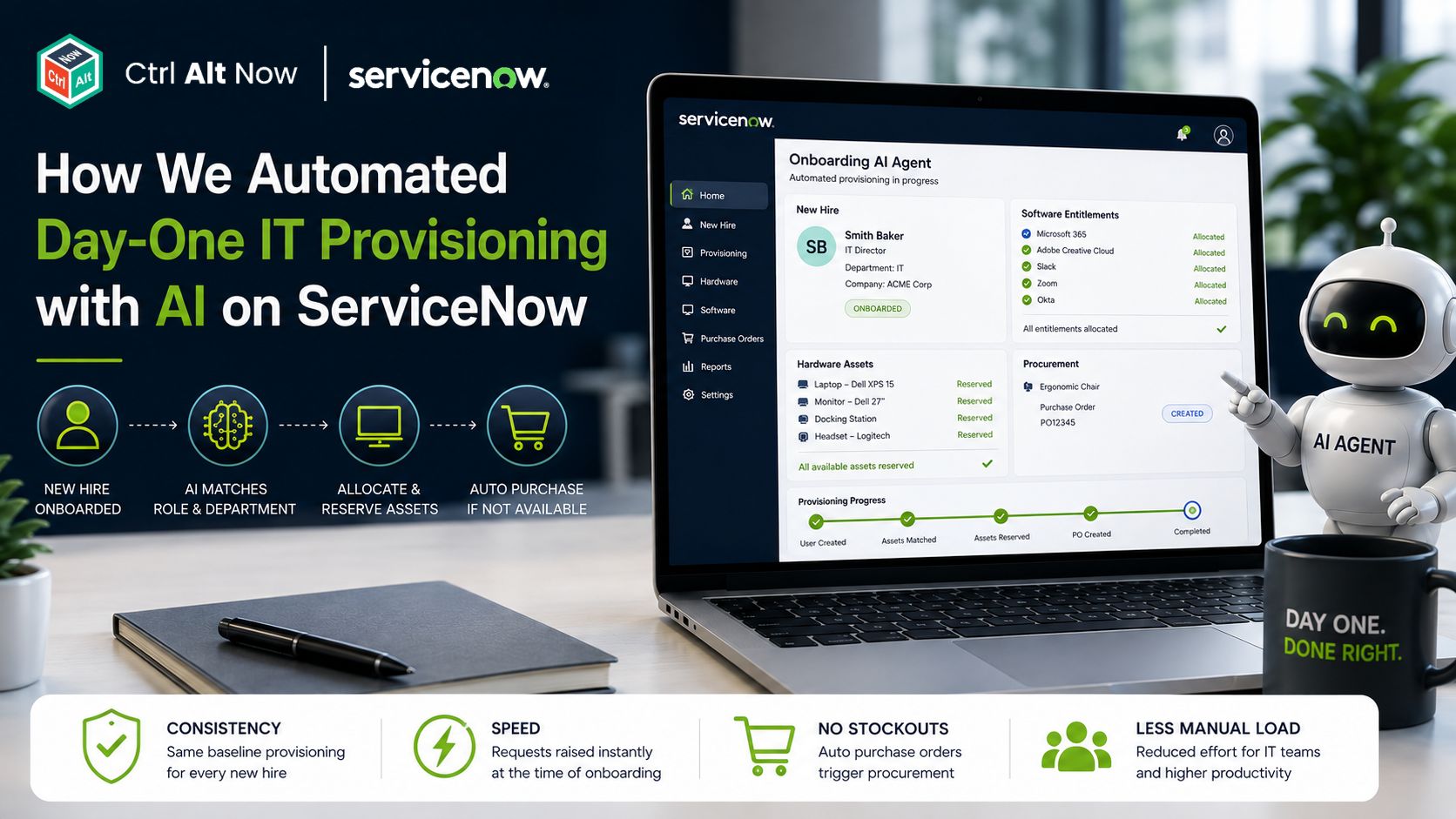
Our team implemented an AI agent that automatically allocates software and hardware assets to newly onboarded employees, based on their department and title.
Here’s the logic in plain terms:
- A new employee is onboarded. The system captures their role and department from the new hire record.
- The AI looks for precedent. It checks the system for assets already allocated to existing users who share the same title and department.
- If matching assets are available, the AI reserves and allocates that same set directly to the new hire — no manual lookup required.
- If a required asset isn’t available in stock, the AI automatically raises a purchase order for it, so procurement is triggered without anyone having to notice the gap and act on it manually.
Walking through a real example
To make this concrete, let’s follow an actual case from our demo: Smith Baker, onboarded as the new IT Director.
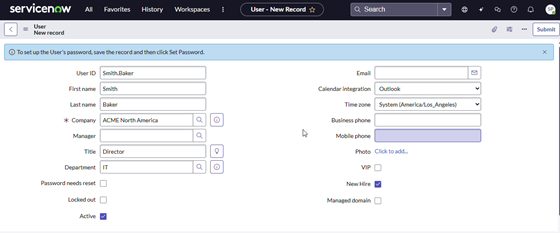
Step 1 — The new hire record
Smith Baker’s user record is created in ServiceNow, capturing his title (Director), department (IT), and company. This is the trigger point — everything downstream is driven by this role and department combination.
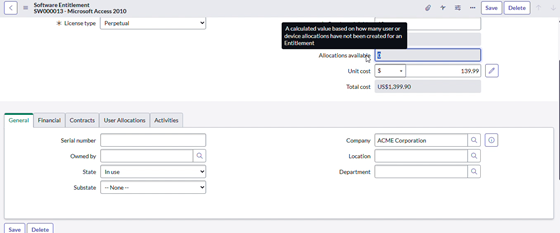
Step 2 — Checking software entitlements
The AI agent cross-references existing software entitlements — checking license availability and allocation history for people in the same role — before deciding what to assign.
Step 3 — Reserving available hardware
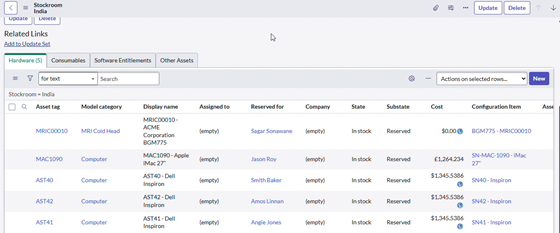
Where matching hardware already exists in stock, the AI reserves it directly for the new hire. In our example, available stockroom assets get marked as reserved for Smith Baker, based on what similar IT Director-level employees were previously issued.
Step 4 — Auto-generating a purchase order when stock is unavailable
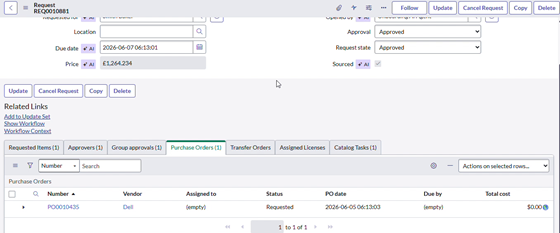
This is the part that removes the manual bottleneck entirely: when a required asset isn’t available, the AI doesn’t stop and wait for someone to notice — it automatically creates a purchase order to procure it, keeping the request moving.
Step 5 — Completed requested items
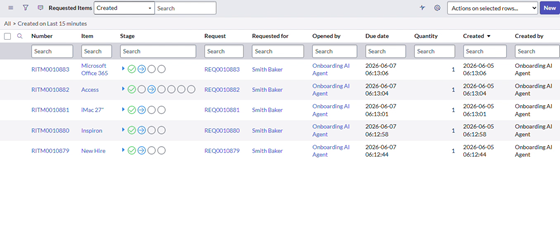
The end result: a full set of requested items — software licenses and hardware — created and progressed automatically, all attributed to the “Onboarding AI Agent” rather than requiring a human to raise each one individually.
Why this matters
- Consistency — every new hire in a given role gets the same baseline provisioning, removing guesswork and reducing variance across departments
- Speed — requests are raised the moment a new hire record is created, instead of waiting on a human to get to it
- No stockouts left unhandled — the automatic purchase order step means gaps in inventory trigger procurement immediately rather than becoming a delay further down the line
- Less manual load on IT — the team no longer needs to manually reference “what did the last person in this role get” for every single new hire
What’s next
We’re continuing to extend this AI-driven provisioning approach across more of the employee lifecycle on ServiceNow. If you’re exploring how AI agents can reduce manual overhead in your own ITSM or HR service delivery workflows, we’d be glad to help.


Leave A Comment