
Introduction
A ServiceNow implementation can be one of the most impactful investments an organization makes to modernize operations, improve service delivery, and accelerate digital transformation. However, success depends on much more than deploying a platform. Without proper planning, governance, and stakeholder alignment, even the most powerful technology can fail to deliver expected outcomes.
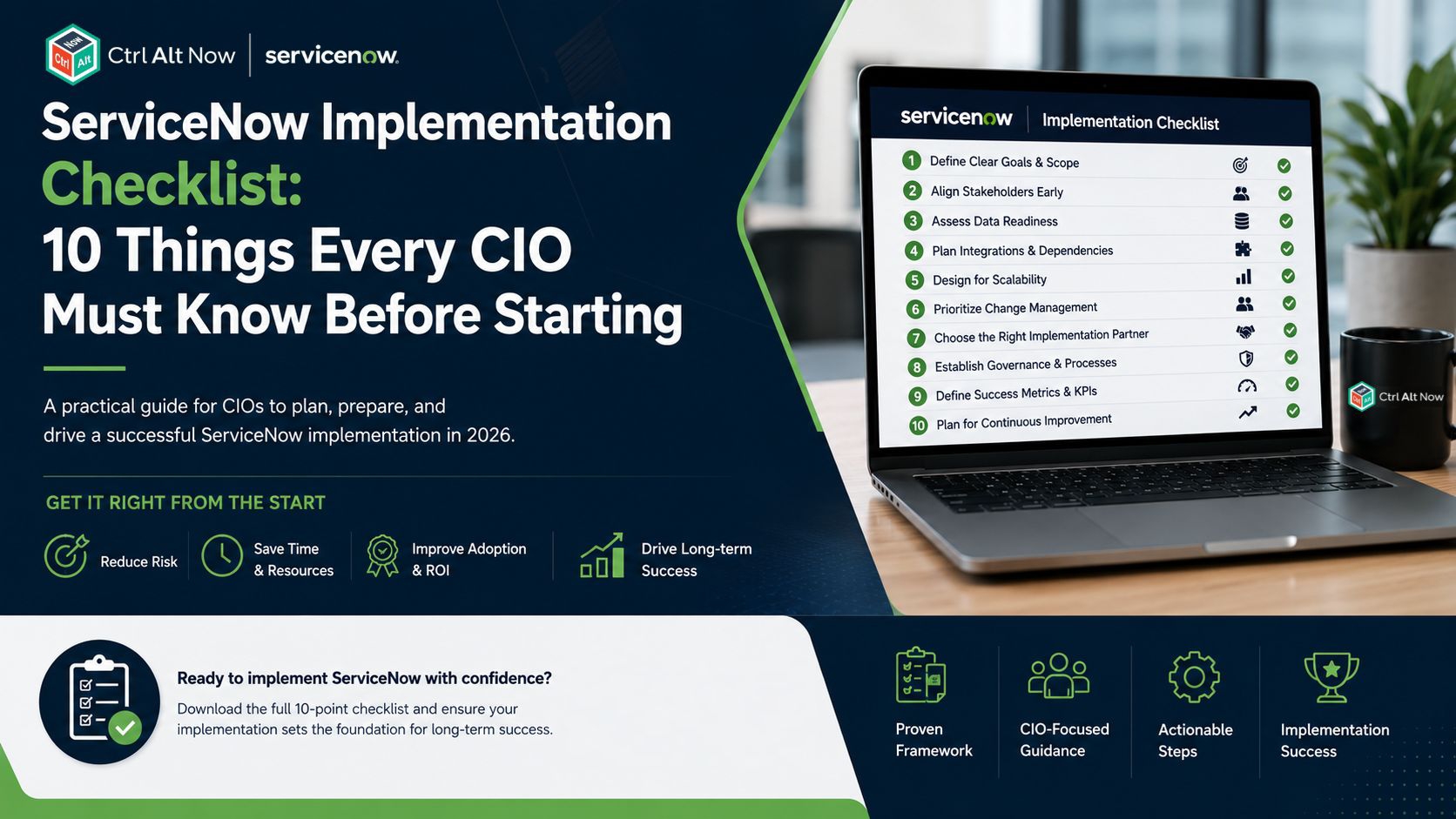
Before starting a ServiceNow journey, CIOs must establish a clear roadmap that aligns technology initiatives with business objectives. This checklist outlines the ten critical factors every CIO should consider to ensure a successful implementation.
1. Define Clear Business Objectives
Start with Outcomes, Not Features
Many organizations focus on platform capabilities before identifying business goals. Define what success looks like—whether it’s reducing service resolution times, automating workflows, improving employee experiences, or strengthening compliance.
2. Assess Current Processes
Understand Before You Transform
Document existing workflows, pain points, and operational bottlenecks. A thorough assessment helps identify automation opportunities and prevents inefficient processes from being replicated within the new platform.
3. Build Executive and Stakeholder Alignment
Ensure Organization-Wide Support
Successful implementations require participation from IT, HR, Security, Operations, and business leaders. Early stakeholder engagement reduces resistance and improves adoption.
4. Prioritize Use Cases Strategically
Avoid Trying to Do Everything at Once
Start with high-impact use cases such as IT Service Management (ITSM), IT Operations Management (ITOM), or Governance, Risk, and Compliance (GRC). A phased approach minimizes risk and accelerates value realization.
5. Establish Strong Governance
Create Decision-Making Frameworks
Define ownership, approval processes, data standards, and platform management policies. Governance ensures consistency and long-term scalability.
6. Plan Data Quality and Migration
Clean Data Drives Better Results
Poor data quality can undermine implementation success. Audit, cleanse, and standardize data before migration to ensure accurate reporting and workflow automation.
7. Minimize Customization
Configure Wherever Possible
Excessive customization increases complexity, costs, and upgrade challenges. Leverage ServiceNow’s out-of-the-box capabilities and industry best practices whenever feasible.
8. Focus on User Experience
Adoption Determines ROI
Even the most advanced platform delivers limited value if employees don’t use it. Design intuitive workflows, self-service experiences, and role-based dashboards that simplify daily work.
9. Prepare for Change Management
Technology Success Requires People Success
Develop a structured change management strategy that includes communication plans, training programs, and user support resources to encourage adoption across the organization.
10. Select the Right Implementation Partner
Expertise Accelerates Success
An experienced ServiceNow partner can help avoid common pitfalls, align implementation with business goals, and accelerate time-to-value through proven methodologies and industry expertise.
Measuring Success Beyond Go-Live
Implementation Is Only the Beginning
Many organizations view deployment as the finish line. In reality, the greatest value comes from continuous optimization. Establish KPIs, monitor adoption rates, measure operational improvements, and regularly identify new automation opportunities.
Conclusion
A successful ServiceNow implementation requires more than technical deployment—it demands strategic planning, organizational alignment, and a commitment to continuous improvement. By following this checklist, CIOs can reduce implementation risks, improve adoption, and maximize the platform’s long-term business impact.
Organizations that approach ServiceNow with a clear strategy, strong governance, and the right implementation partner are better positioned to unlock operational efficiency, enhance employee experiences, and create a scalable foundation for future digital transformation initiatives.


Leave A Comment