From Commission Calculations to Strategic Sales Performance
For decades, sales incentive compensation management has been viewed primarily as a back-office function. The objective was simple: calculate commissions, validate spreadsheets, resolve disputes, and process payouts accurately.
As organizations expanded, compensation structures became more sophisticated, yet the underlying processes often remained unchanged. Many businesses continued relying on spreadsheets, disconnected systems, and manual workflows to manage increasingly complex compensation programs.
Today, that model is reaching its limits.
Sales organizations are scaling faster than ever. Go-to-market strategies evolve continuously, revenue teams are expected to adapt in real time, and business leaders need greater visibility into performance. Yet incentive management processes frequently struggle to keep pace.
The challenge is no longer about calculating payouts faster.
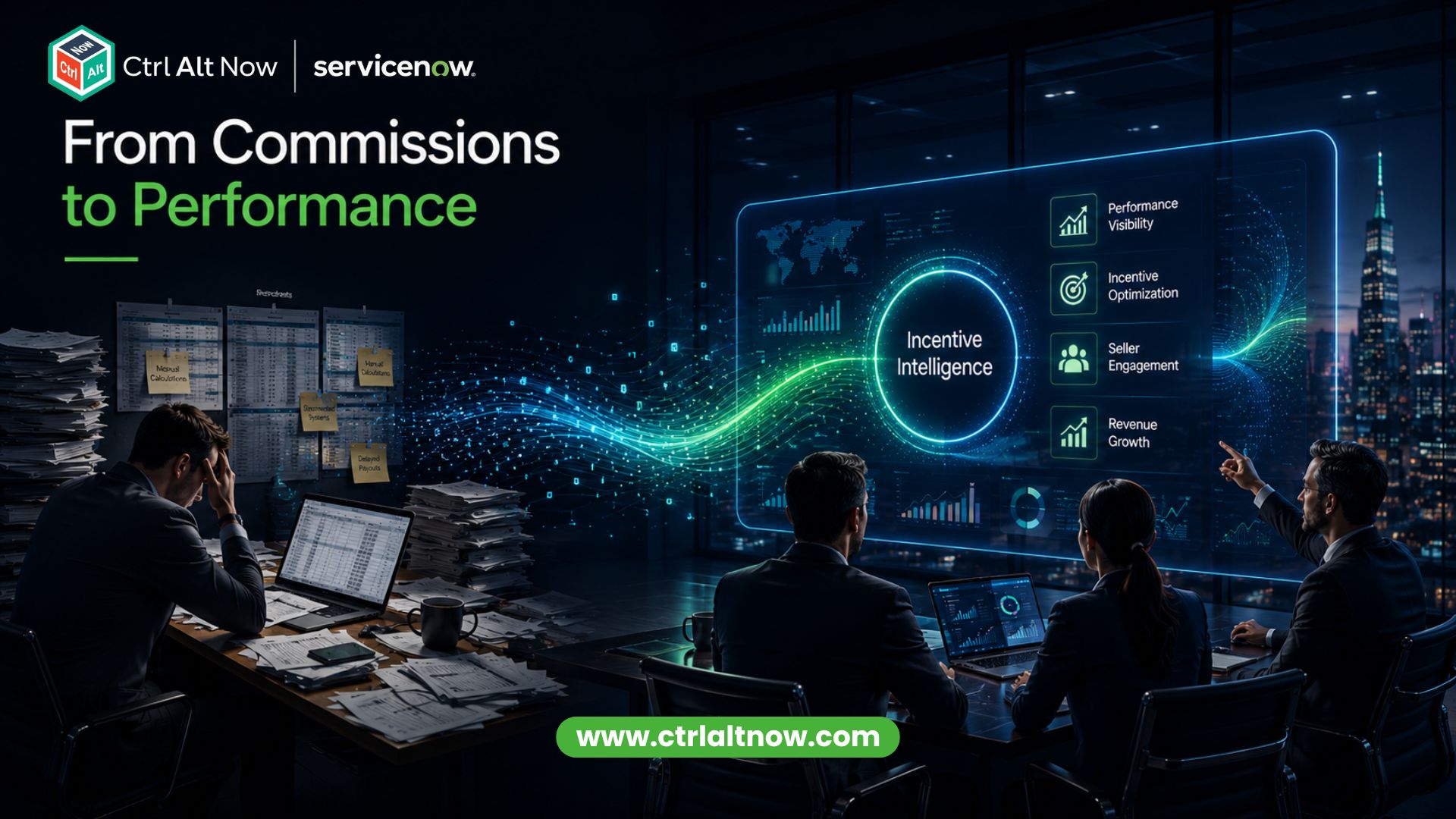
The real opportunity is transforming incentive management into a strategic driver of sales performance and business growth.
Why Incentive Management Becomes More Complex as Businesses Grow
Most organizations begin with relatively straightforward compensation plans. A small sales team, a few data sources, and simple commission structures make spreadsheet-based management practical.
However, growth introduces complexity.
Sales data becomes distributed across multiple systems, including CRM platforms, ERP solutions, finance applications, HR systems, customer success platforms, and various manual tracking tools.
At the same time, compensation plans evolve to support more advanced business goals, including:
- Territory-based incentives
- Accelerators and multipliers
- Team-based compensation models
- Overlay sales teams
- Partner and channel incentives
- Special adjustments and exception handling
Each new layer adds complexity, creating a highly interconnected process that impacts Sales, Finance, HR, Revenue Operations, and executive leadership.
What once took hours can now require days of reconciliation and validation.
The Hidden Costs of Manual Incentive Management
Many organizations continue using spreadsheets to bridge gaps between systems. While this may appear manageable, the long-term costs are significant.
Delayed Compensation Visibility
Sales representatives often wait until the end of a month or quarter to understand their earnings and attainment levels.
By the time compensation insights become available, the opportunity to influence behavior and improve performance has already passed.
Reduced Trust Across Teams
When calculations happen behind the scenes, disputes become inevitable.
Sales teams question commission figures, finance teams spend time validating calculations, and operations teams become trapped in reconciliation cycles instead of focusing on strategic initiatives.
Limited Performance Transparency
Most sellers lack real-time access to critical information such as:
- Earnings projections
- Quota attainment progress
- Commission acceleration opportunities
- Incentive plan performance
Without visibility, incentive programs lose their motivational impact.
Administrative Burden
Revenue Operations, Sales Operations, and Finance teams spend countless hours maintaining spreadsheets, managing exceptions, validating data, and answering compensation-related questions.
Valuable resources that could be driving revenue growth become consumed by administrative work.
Why the AI Era Changes Everything
Artificial intelligence is redefining how organizations approach sales performance management.
The next generation of incentive compensation platforms is not simply focused on automation. Instead, it is enabling entirely new ways of managing, analyzing, and optimizing sales performance.
Modern organizations increasingly expect incentive systems that are:
Real-Time
Compensation visibility should update as performance data changes.
Sales teams should have immediate insight into attainment, earnings, and opportunities rather than waiting for monthly calculations.
AI-Assisted
AI can proactively identify anomalies, forecast payouts, detect compensation risks, and surface insights that would otherwise remain hidden.
This allows teams to spend less time investigating issues and more time making informed decisions.
Transparent
Trust is built when every stakeholder understands how earnings are calculated.
Clear and auditable compensation processes improve collaboration between Sales, Finance, HR, and Operations.
Data-Native
Modern incentive management should operate seamlessly across enterprise data ecosystems rather than relying on exported spreadsheets and disconnected workflows.
Compensation becomes part of a broader revenue intelligence strategy.
From Payout Engine to Performance Platform
Perhaps the most important shift occurring today is a change in perspective.
Historically, incentive compensation management was treated as a financial process focused on accuracy.
While accuracy remains essential, leading organizations are recognizing that incentive management can play a much larger role.
Forward-thinking businesses are using incentive programs to:
- Influence sales behavior
- Support strategic business priorities
- Align compensation with revenue goals
- Adapt quickly to market changes
- Improve seller engagement and retention
In this model, incentive management evolves from a commission calculation tool into a comprehensive sales performance platform.
What Defines a Modern Incentive Management Solution?
Organizations evaluating the future of sales performance should prioritize several key capabilities:
Unified Data Foundation
Compensation data must connect seamlessly across CRM, ERP, HR, Finance, and operational systems to create a single source of truth.
Real-Time Performance Visibility
Sales representatives, managers, and executives should have immediate access to earnings, attainment, quotas, and performance metrics.
AI-Powered Intelligence
Forecasting, anomaly detection, compensation analytics, and intelligent recommendations should become standard features.
Flexible Plan Management
Businesses need the ability to modify compensation plans quickly without creating administrative complexity.
Enterprise Governance and Compliance
Auditability, transparency, security, and compliance must remain foundational as organizations scale.
The Future of Sales Incentive Compensation
Sales incentive compensation management is reaching a critical inflection point.
What was once managed through spreadsheets, delayed calculations, and disconnected systems is evolving into a strategic business capability.
Organizations increasingly recognize that incentive management is not simply about paying sales teams correctly. It is about creating alignment, visibility, motivation, and accountability across the revenue organization.
The future belongs to platforms that combine unified enterprise data, AI-powered intelligence, workflow automation, and real-time transparency.
Because in the AI era, the most effective incentive programs will not merely reward performance—they will actively help create it.
How CtrlAltNow Is Thinking About This
At CtrlAltNow, we believe incentive compensation management should move beyond commission calculations and become an intelligent performance ecosystem.
By combining AI-driven insights, enterprise workflows, connected data architectures, and modern digital experiences, organizations can transform incentive management from an operational challenge into a strategic growth lever.
The shift is already underway.
The question is not whether incentive management will evolve—but how quickly organizations will embrace the opportunity.


Leave A Comment