
Introduction
IT teams today face an increasing volume of service requests, password resets, software access requests, troubleshooting issues, and repetitive support inquiries. As organizations scale, these tickets consume valuable IT resources and slow down service delivery.
The good news is that many of these requests can be prevented before they reach the help desk. Modern AI-powered ServiceNow portals are transforming employee self-service experiences by providing intelligent support, automated workflows, and personalized assistance. Organizations that invest in well-designed AI portals often see significant reductions in ticket volumes while improving employee satisfaction.
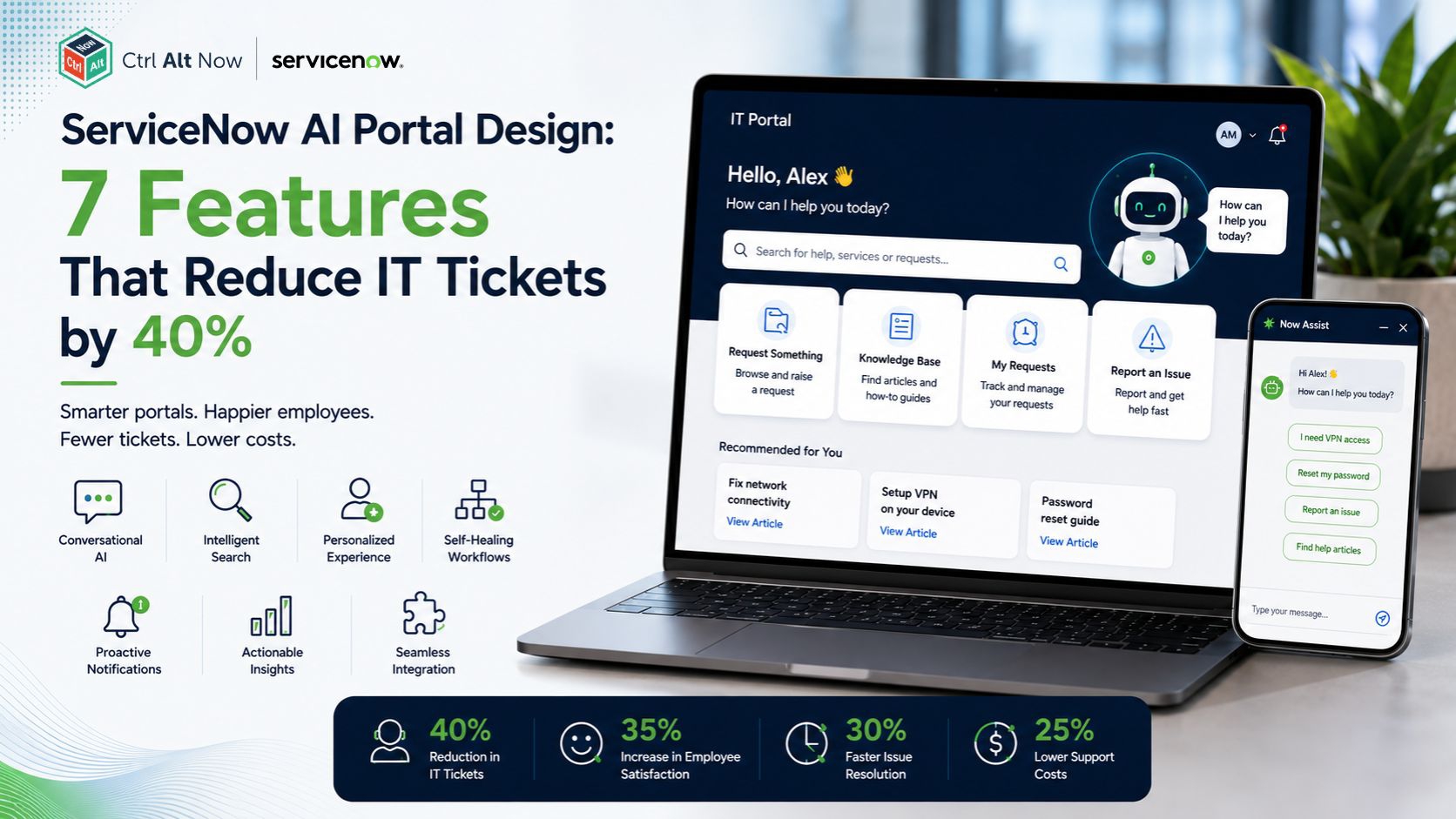
Here are seven essential ServiceNow AI portal features that can help reduce IT tickets by up to 40% and create a more efficient digital workplace.
1. AI-Powered Virtual Agent
Resolve Issues Before a Ticket Is Created
Employees often submit tickets for simple issues such as password resets, VPN access, software installation, or account unlock requests. An AI-powered Virtual Agent can instantly answer questions, guide users through troubleshooting steps, and automate routine requests.
This enables faster resolutions while reducing the burden on support teams.
2. Intelligent Knowledge Search
Deliver Answers in Seconds
Traditional portals require users to search through multiple articles to find solutions. AI-enhanced search understands intent and context, presenting the most relevant knowledge articles, FAQs, and support resources immediately.
The faster users find answers, the fewer tickets are submitted.
3. Personalized Employee Experience
Show Relevant Services and Information
A modern ServiceNow portal should provide role-based recommendations, frequently used services, and personalized content based on department, location, and user behavior.
Personalization reduces confusion and helps employees quickly access the resources they need.
4. Automated Service Catalog Workflows
Eliminate Manual Request Processing
Common requests such as software provisioning, hardware orders, and access approvals can be fully automated through intelligent workflows.
Employees receive services faster while IT teams spend less time handling repetitive tasks.
5. Predictive Recommendations
Anticipate User Needs
AI can analyze employee behavior and recommend relevant services, knowledge articles, or actions before a support request is submitted.
Proactive guidance helps prevent issues and improves overall user experience.
6. Real-Time Ticket Status and Notifications
Reduce “Update Request” Tickets
Many support tickets are created simply because employees want updates on existing requests. AI-powered portals provide real-time visibility into ticket progress, approvals, and expected resolution timelines.
This transparency significantly reduces unnecessary follow-up inquiries.
7. Unified Multi-Department Support Hub
One Portal for Every Employee Need
Employees shouldn’t have to navigate separate systems for IT, HR, Facilities, Security, or Finance requests. A unified ServiceNow portal centralizes services across departments, creating a single destination for support.
This streamlined experience increases self-service adoption and reduces service desk dependency.
The Business Impact of AI-Driven Portals
More Than Just Ticket Reduction
Organizations implementing AI-powered ServiceNow portals often experience broader benefits beyond lower ticket volumes, including:
- Faster issue resolution
- Improved employee satisfaction
- Reduced support costs
- Higher service desk efficiency
- Increased self-service adoption
- Better operational visibility
- Enhanced digital employee experience
These improvements allow IT teams to focus on strategic initiatives rather than repetitive support tasks.
Conclusion
Reducing IT tickets is not simply about deflecting requests—it’s about empowering employees to solve problems faster and access services more efficiently. A thoughtfully designed ServiceNow AI portal combines automation, personalization, and intelligence to create a seamless self-service experience.
By implementing features such as AI virtual agents, intelligent search, predictive recommendations, and automated workflows, organizations can significantly reduce ticket volumes while improving service quality. As AI continues to reshape enterprise service delivery, modern ServiceNow portals are becoming a critical component of every digital workplace strategy.
For organizations looking to maximize ServiceNow ROI, investing in AI-first portal design is one of the fastest ways to improve efficiency, enhance employee experiences, and scale support operations without increasing costs.


Leave A Comment