
Introduction
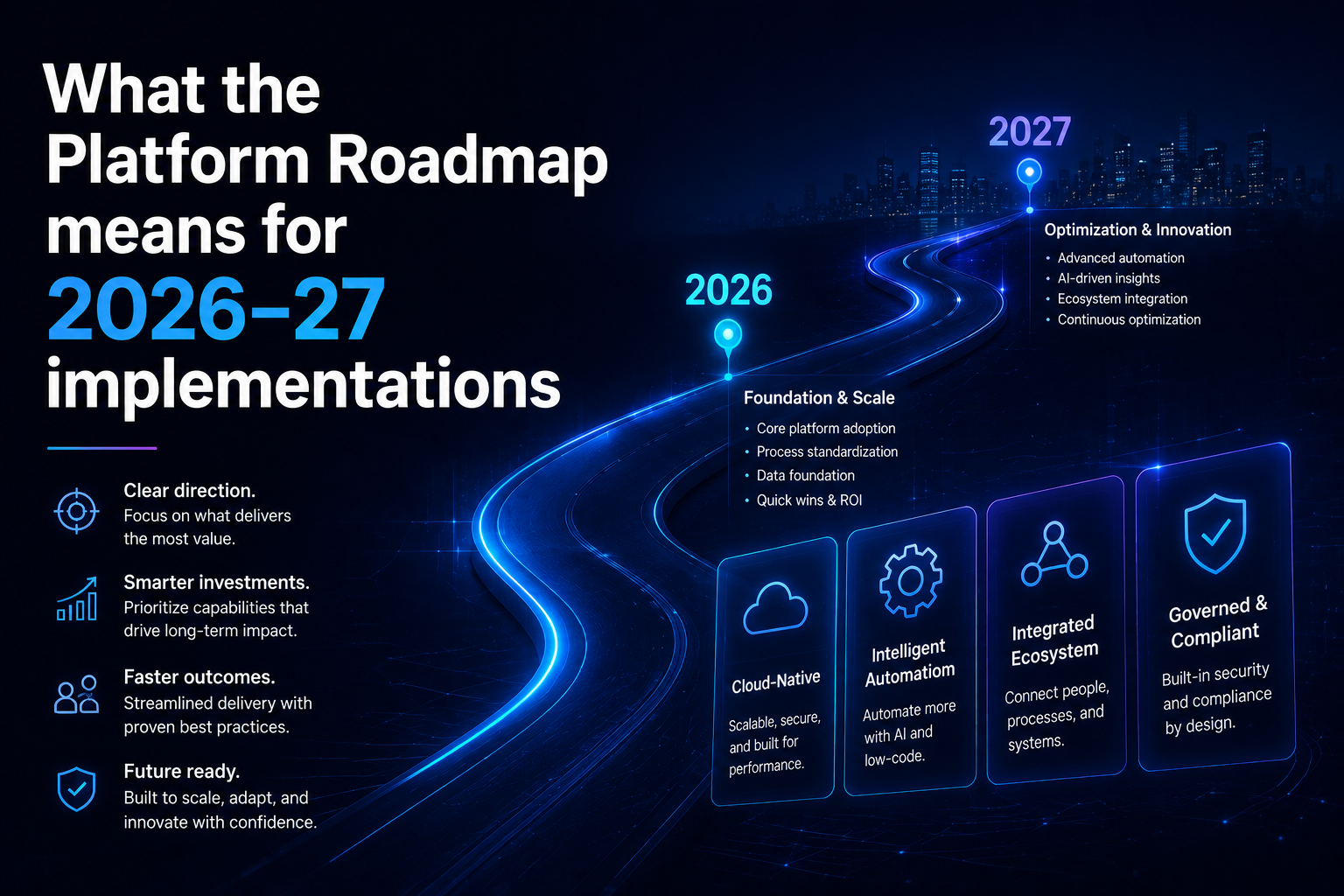
Enterprise technology is entering a new phase. For years, organizations focused on digitizing workflows, automating repetitive tasks, and improving operational efficiency through cloud platforms. But the roadmap emerging for 2026–27 signals something much larger: the transition from workflow automation to AI-driven operational execution.
As enterprise platforms evolve, implementations will no longer be measured solely by how efficiently workflows are configured. Instead, success will depend on how effectively organizations design systems where AI, data, governance, and human oversight work together at scale. For businesses planning transformation initiatives, understanding what this shift means is essential.
From Workflow Automation to AI-First Operations
Traditional enterprise implementations focused on process standardization—digitizing approvals, automating tickets, or streamlining service delivery. The next wave of implementations, however, will be built around AI-first operational design.
Organizations will increasingly rethink how work gets done from the ground up. Rather than simply automating existing processes, businesses will design operations where AI proactively executes tasks, identifies bottlenecks, and recommends actions before issues escalate.
This represents a significant mindset shift. Instead of asking, “How do we automate this workflow?” enterprises will ask, “How can AI help execute this work intelligently?”
Enterprise-Wide Orchestration Becomes Essential
The future of implementations will not be isolated to single departments or business functions. Organizations are moving toward enterprise-wide orchestration, where systems, teams, and workflows operate as a connected ecosystem.
AI agents and intelligent platforms will increasingly coordinate actions across IT, HR, customer service, finance, and operations. This means implementations must focus on interoperability and cross-functional alignment rather than siloed deployments.
In practice, enterprises will prioritize platforms capable of connecting fragmented systems into unified operational frameworks that can scale across the organization.
Governance Will Move to the Center of Transformation
As AI systems gain greater autonomy, governance will become one of the most critical implementation priorities.
Organizations cannot afford AI systems that operate without accountability, transparency, or oversight. Future implementations will require clear governance frameworks that address compliance, observability, risk management, and ethical decision-making.
The conversation will shift from “Can AI automate this?” to “How do we ensure AI executes responsibly?”
For enterprises, governance will no longer be an afterthought—it will become a foundational design principle.
Unified Data Architectures Will Power Better Decisions
AI effectiveness depends on data quality. Fragmented systems and disconnected datasets will limit enterprise AI performance.
This is why 2026–27 implementations will increasingly focus on unified data architectures. Organizations will prioritize centralized visibility, integrated ecosystems, and real-time intelligence to ensure AI systems can make accurate and context-aware decisions.
Without strong data foundations, even the most advanced AI initiatives will struggle to deliver measurable outcomes.
Human-in-the-Loop Models Will Define Success
Despite rapid AI advancement, human oversight will remain essential. The most effective implementations will combine AI speed with human judgment through human-in-the-loop execution models.
AI will handle repetitive execution and decision support, while humans provide strategic oversight, exception handling, and ethical accountability. This balance will help organizations scale responsibly without sacrificing trust or control.
Conclusion
The platform roadmap for 2026–27 signals a major transformation in enterprise implementation strategy. Future initiatives will go far beyond workflow automation, focusing instead on AI-first design, enterprise orchestration, governance, unified data, and responsible execution.
The next generation of enterprise platforms will not simply support work—they will increasingly execute it. The organizations that succeed will be those that design systems where AI can operate responsibly, intelligently, and at scale.
For enterprises preparing for the future, the question is no longer whether AI will reshape implementation models—but how quickly organizations can adapt to the change.


Leave A Comment