

Introduction
Managing governance, risk, and compliance (GRC) is becoming increasingly complex for enterprises. Changing regulations, cybersecurity threats, third-party dependencies, and internal control requirements make it difficult to manage risks through disconnected spreadsheets and manual processes.
A structured ServiceNow GRC implementation roadmap helps organizations centralize risk information, streamline compliance activities, automate workflows, and establish continuous monitoring.
What Is ServiceNow GRC?
ServiceNow GRC capabilities, delivered through its Integrated Risk Management (IRM) solutions, help organizations manage enterprise risks, policies, compliance requirements, audits, and third-party risks within a connected platform.
This approach improves visibility and helps teams coordinate risk and compliance activities more effectively.
Why Do Enterprises Need a GRC Implementation Roadmap?
A defined implementation roadmap helps organizations:
- Identify and prioritize business risks.
- Standardize risk assessment processes.
- Improve regulatory compliance management.
- Automate policy reviews and approvals.
- Strengthen audit readiness.
- Monitor risks and controls continuously.
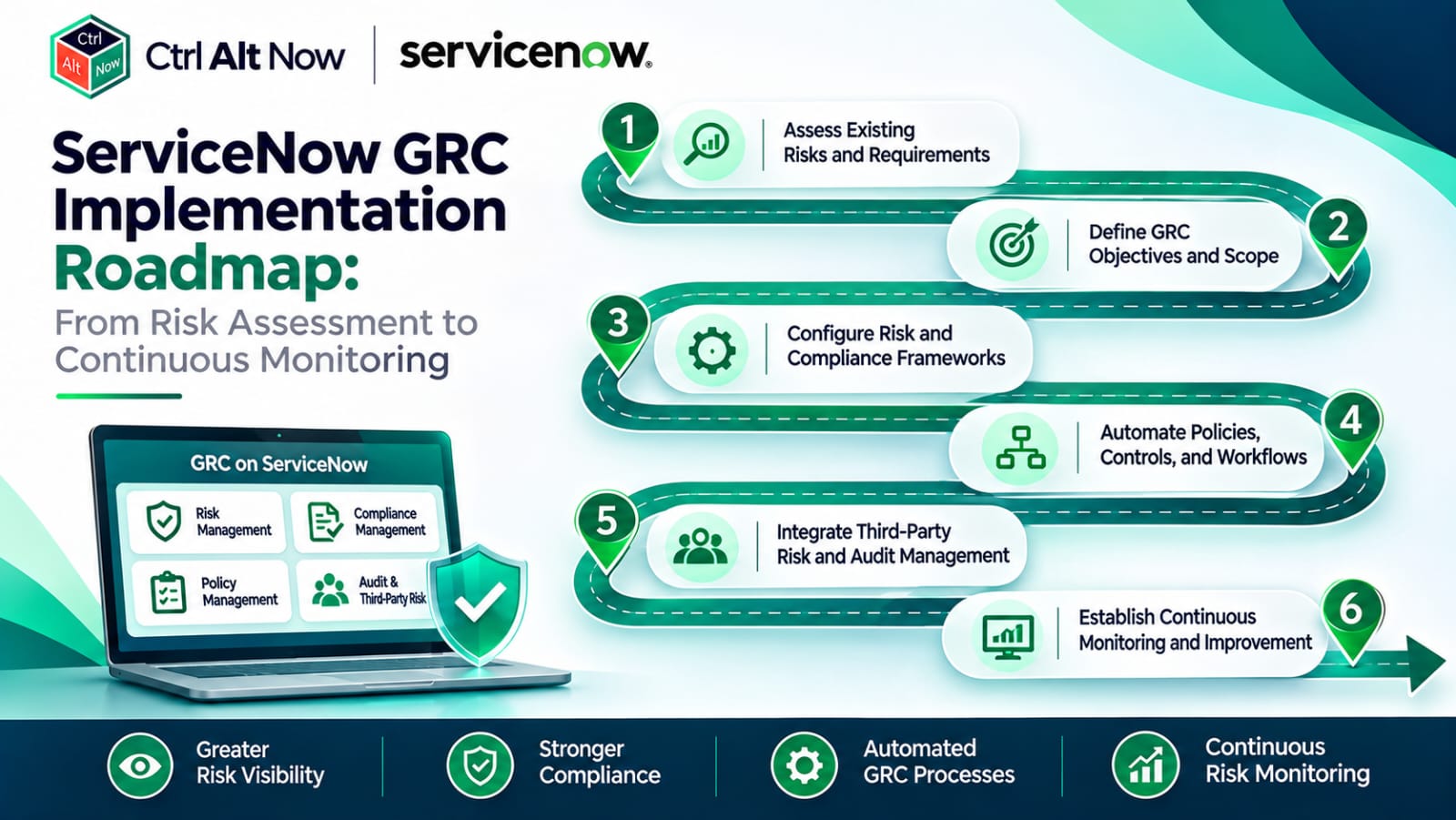
ServiceNow GRC Implementation Roadmap: 6 Key Steps
Step 1: Assess Existing Risks and Requirements
Begin by evaluating the organization’s current risk environment, regulatory obligations, business processes, and existing GRC practices.
Identify gaps in risk management, compliance reporting, audit processes, and internal controls.
Step 2: Define GRC Objectives and Scope
Establish clear implementation goals based on business priorities. Determine which areas need attention, such as:
- Enterprise risk management
- Policy and compliance management
- Audit management
- Third-party risk management
- Regulatory compliance
Defining the scope helps create a practical implementation plan.
Step 3: Configure Risk and Compliance Frameworks
Establish risk categories, assessment criteria, control requirements, and compliance frameworks.
Configure workflows to help teams identify risks, evaluate their impact, assign ownership, and document mitigation activities.
Step 4: Automate Policies, Controls, and Workflows
Use ServiceNow workflows to streamline policy distribution, control assessments, approval processes, and compliance tasks.
Automation can reduce repetitive administration and improve accountability across departments.
Step 5: Integrate Third-Party Risk and Audit Management
Extend risk visibility beyond internal operations by assessing vendors, suppliers, and external service providers.
Connect audit activities with risk and compliance processes to improve documentation, issue tracking, and remediation.
Step 6: Establish Continuous Monitoring and Improvement
GRC implementation should not end with deployment. Organizations need ongoing monitoring to identify changes in risk exposure, control effectiveness, and compliance status.
Use dashboards, automated notifications, scheduled assessments, and reporting to support continuous oversight and timely action.
Best Practices for Successful ServiceNow GRC Implementation
- Start with high-priority risks and compliance requirements.
- Assign clear ownership for risks and controls.
- Maintain accurate and centralized risk information.
- Standardize assessment and approval workflows.
- Integrate relevant enterprise data sources.
- Review dashboards and risk indicators regularly.
- Continuously improve processes as regulations and business needs change.
How CtrlAltNow Can Help
CtrlAltNow helps organizations plan and optimize ServiceNow GRC implementations based on their business and compliance requirements.
From risk assessment and workflow configuration to compliance automation, integration, and continuous monitoring, CtrlAltNow supports enterprises in building a structured approach to governance and risk management.
Conclusion
A successful ServiceNow GRC implementation roadmap connects risk assessment, compliance management, policy automation, audit processes, and continuous monitoring into a coordinated approach.
By following a phased implementation strategy, enterprises can improve risk visibility, strengthen governance, and respond more effectively to changing compliance requirements. With CtrlAltNow, organizations can work toward a scalable GRC environment that supports long-term business resilience.


Leave A Comment