
Introduction
Sales commissions play a critical role in motivating sales teams and aligning individual performance with business goals. However, as organizations grow, managing complex compensation plans, calculating commissions accurately, and ensuring timely payouts can become increasingly difficult.
Many enterprises still depend on spreadsheets, manual calculations, disconnected systems, and lengthy approval processes to manage sales commissions. These approaches can create errors, delays, disputes, and limited visibility for sales teams and finance leaders.
Modern sales commission management solutions can help enterprises automate calculations, streamline workflows, improve transparency, and connect compensation processes with existing business systems.
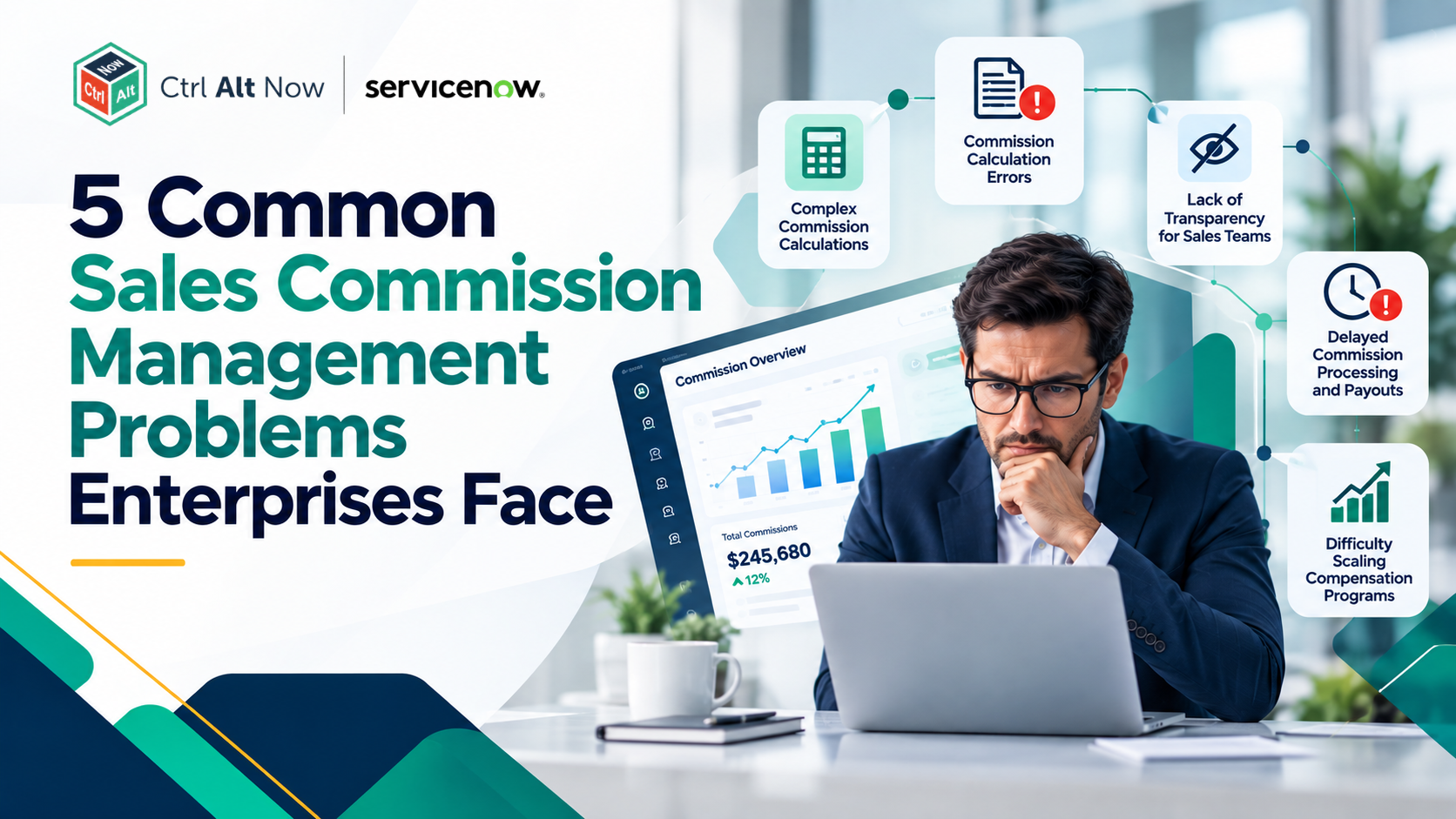
Here are five common sales commission management problems enterprises face and how organizations can address them.
1. Complex Commission Calculations
Multiple Plans and Compensation Rules
Enterprise sales teams often operate under different commission structures based on roles, regions, products, revenue targets, customer segments, or sales channels.
Managing these rules manually can make commission calculations complicated and time-consuming. A single calculation may involve quotas, accelerators, thresholds, bonuses, clawbacks, splits, and other compensation conditions.
How Automation Helps
An automated commission management system can apply predefined rules consistently and reduce the amount of manual calculation required. This helps sales operations and finance teams manage complex compensation plans more efficiently.
2. Commission Calculation Errors
Manual Processes Increase Risk
When commission calculations depend heavily on spreadsheets and manual data entry, errors can occur due to incorrect formulas, outdated information, duplicate entries, or missing sales data.
Even small calculation errors can create disputes between sales representatives and finance teams.
Improving Accuracy
Centralizing commission data and automating calculation workflows can reduce manual intervention. Organizations can establish standardized rules and create a more consistent process for calculating and reviewing commissions.
3. Lack of Transparency for Sales Teams
Limited Visibility Creates Disputes
Sales representatives often want to know how their commissions are calculated, which deals are included, and how close they are to achieving their targets.
When information is scattered across spreadsheets, emails, CRM systems, and finance tools, sales teams may have limited visibility into their compensation.
Creating Greater Transparency
A centralized commission management platform can provide sales representatives and managers with better access to relevant compensation information.
Clear visibility into performance, eligible transactions, commission calculations, and payout status can help reduce unnecessary questions and improve communication between sales and finance teams.
4. Delayed Commission Processing and Payouts
Manual Approvals Slow Down the Process
Commission management often involves several stakeholders, including sales operations, finance, sales managers, and leadership.
When approvals are handled through emails and spreadsheets, reviewing and approving commissions can take considerable time. Delays can ultimately affect the payout cycle and create additional administrative work.
Automating Approval Workflows
Workflow automation can help route commission calculations to the appropriate stakeholders for review and approval.
Instead of relying on multiple disconnected processes, enterprises can establish structured workflows that improve processing efficiency and provide better visibility into approval status.
5. Difficulty Scaling Compensation Programs
Growth Creates More Complexity
A commission process that works for a small sales organization may become difficult to manage as the company expands.
Adding new sales representatives, territories, products, compensation plans, currencies, or business units can increase the complexity of commission administration.
Building a Scalable Process
Enterprises need a commission management approach that can adapt to changing business requirements.
A centralized and automated platform can help organizations standardize compensation processes while supporting different plans, roles, and business rules as the organization grows.
How Automation Can Transform Sales Commission Management
Modern enterprises can move beyond spreadsheet-driven commission administration by connecting compensation processes with their broader enterprise workflows.
A solution such as IncentIQ on ServiceNow can help organizations bring sales incentive and commission management into a centralized workflow environment.
Key capabilities can include:
- Automated commission calculations
- Centralized compensation rules
- Approval workflow automation
- Better visibility into commission status
- Reduced manual administration
- Improved communication between sales and finance
- More consistent compensation processes
- Scalable management of complex incentive plans
By reducing repetitive administrative work, organizations can allow sales operations and finance teams to focus more on analysis, planning, and business performance.
Conclusion
Sales commission management becomes increasingly challenging as enterprises introduce more complex compensation plans, expand their sales organizations, and manage larger volumes of transaction data.
The five common challenges complex calculations, calculation errors, limited transparency, delayed processing, and scalability issues can all create unnecessary administrative effort and affect the overall sales compensation experience.
Moving from manual, spreadsheet based processes toward automated commission management can help enterprises improve accuracy, visibility, workflow efficiency, and scalability.
With solutions such as IncentIQ, enterprises can modernize sales commission management by bringing compensation workflows into a structured ServiceNow environment.
For organizations looking to streamline incentive compensation and improve the way sales commissions are managed, automation can be an important step toward a more efficient and transparent process.


Leave A Comment